


“Selvedge” Is the New “Cashmere.” Why? Because Everyone’s Slapping It on a Swing Tag
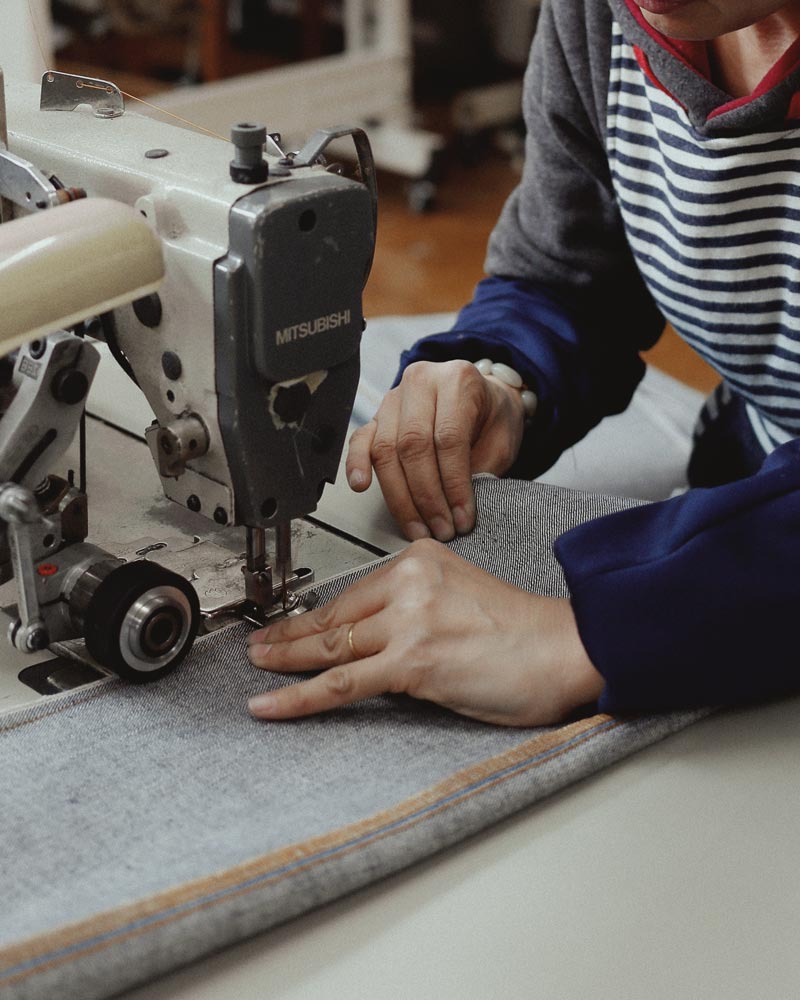
Fast and mid-tier fashion figured out the trick years ago. Print a red line on a cuff, call it “selvedge,” and charge triple. Most people have no idea the word describes how a fabric is woven, not how good it is. It’s a construction detail that got turned into a marketing ploy.
That is a problem this guide is meant to solve.
Selvedge doesn’t mean quality. It means a specific loom, a specific edge, and (if you know what you’re looking at) a level of patience that companies in mass production don’t have anymore. Learn to tell the difference, and you’ll never overpay for fake selvedge again. Get it right, and you’re buying a fabric that ages with you, like a leather patina, instead of falling apart.
But – and this is important – the old-fashioned process used to make good selvedge denim means a skilled mill has an extraordinary amount of control over the texture, tension, density, and character of the fabric. Put excellent cotton, thoughtful yarn, proper indigo, a well-tuned shuttle loom, and obsessive garment construction together, and you get something mass-market denim struggles to imitate and never will.
Remember this if nothing else: Selvedge is a manufacturing characteristic, not a certificate of excellence.
What Is Selvedge Denim, Actually?
Denim itself is nothing special. Just cotton twill, dyed with indigo. It’s fundamentally a warp-faced twill fabric, which sounds technical, but just means a woven fabric made from two sets of yarn:
Warp → the yarns running lengthwise
Weft → the yarns running across them
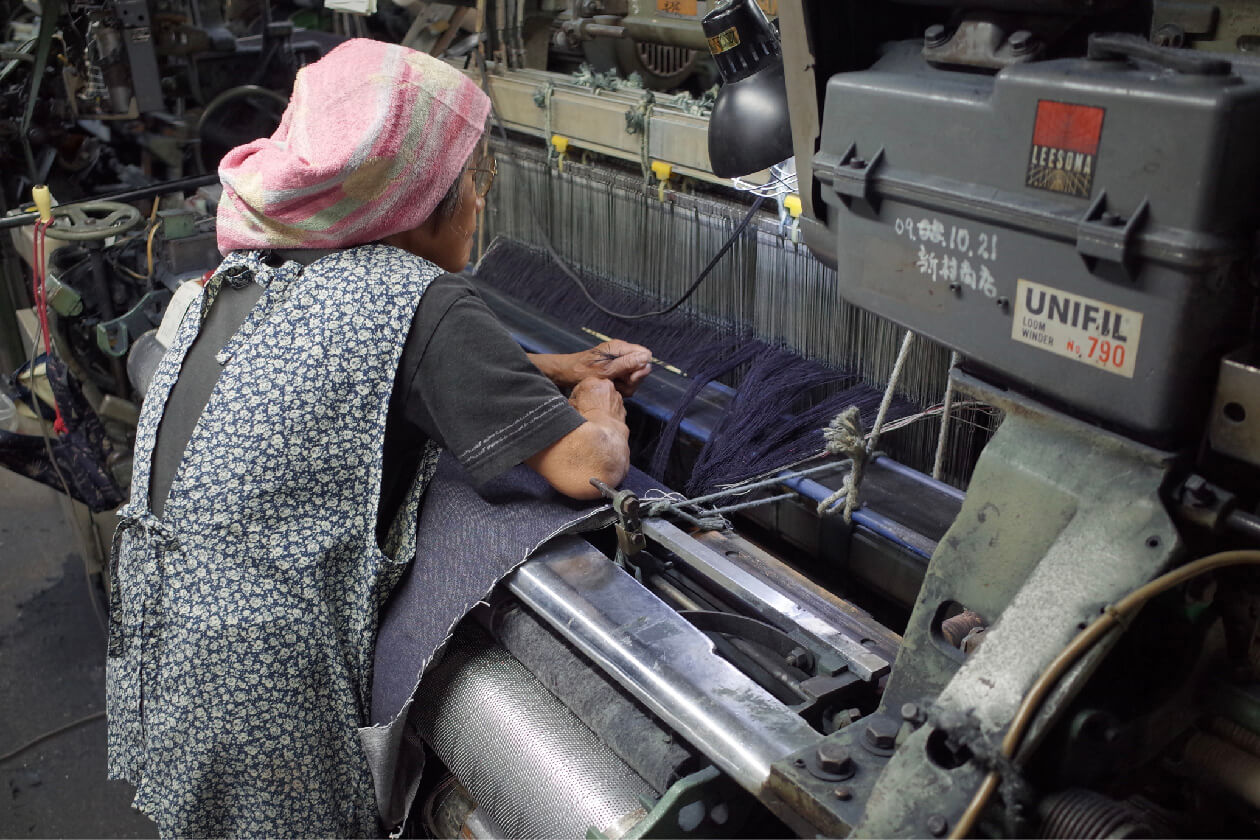
The “selvedge” part is about the edge of the fabric. It literally means “self-edge.” On old shuttle looms, a single continuous weft thread is shot back and forth across the loom by a wooden shuttle. Because the thread never gets cut, it loops back on itself at the fabric’s edge and seals it without fraying. No overlocking is needed. Selvedge finishing typically looks white, with a coloured line (most often red) running through it.
Modern denim is made on projectile or air-jet looms, which fire the weft thread across in individual bursts and cut it at each pass. It’s faster, wider, and cheaper. But the cut edge frays, so it has to be locked with an overlock stitch. That’s non-selvedge denim, and it’s what comprises the finishing on the vast majority of jeans found in the marketplace today.
The tradeoff is speed versus texture. A shuttle loom is roughly ten to fifteen times slower than a modern projectile loom, and it only weaves narrow bolts that are around 29–32 inches wide. Modern equipment (larger production) allows for widths of 60 inches or more. That narrow, slow weave is exactly what gives shuttle-loomed denim its slight irregularity. The “slub,” the texture, is the character that denim obsessives chase and freak out about when they find the “good stuff.”
A Few Things “Selvedge” Tells You, and a Few Things It Doesn’t
It tells you the fabric was woven on a vintage-style shuttle loom, self-finished at the edge.
It tells you less cloth came off the loom. More yards of cloth are required to cut one pair of jeans, making the yield per bolt of denim much lower, and therefore more expensive.
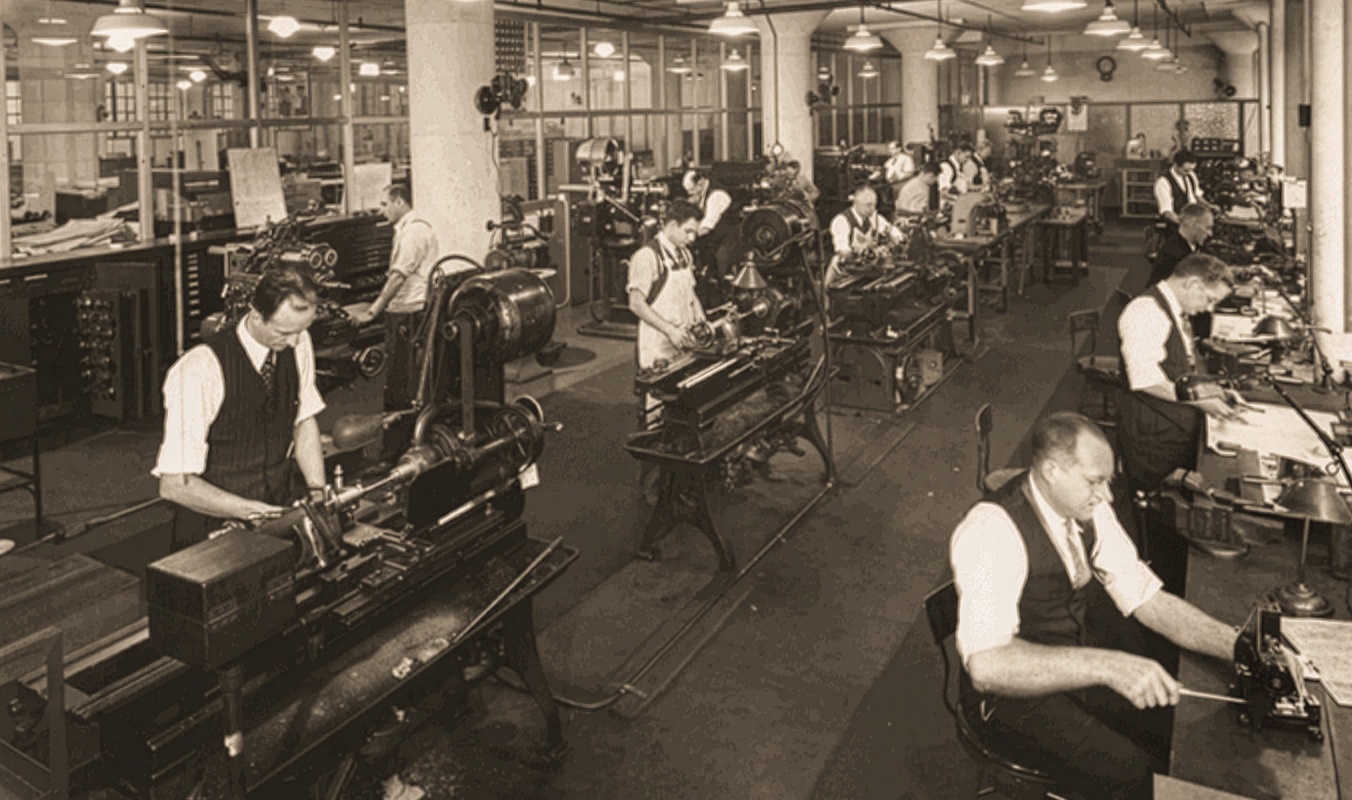
It tells you nothing about weight, fibre quality, dye method, or how the jeans were sewn. Nothing hints at whether the cotton is good, the yarn is good, the indigo was applied well, the loom was operated properly, the jeans were cut properly, or the person sewing them knew what they were doing. And all of these factors are really important.
It has nothing to do with “raw.” Raw refers to finishing: denim that hasn’t been pre-washed or distressed. You can have raw denim that isn’t selvedge (projectile-woven, never washed) and selvedge denim that’s been washed to death. They’re two separate things, working with two separate axes.
Most of the industry conflates these things on purpose because it sounds better in a product description on a tag. Tags are one of the first things you see and use to judge comparatively against, right?
The bottom line is you can make mediocre selvedge denim. A mediocre mill can still run a shuttle loom. You can also make exceptional denim on a modern loom.
But when it comes to good selvedge denim, you get jeans that don’t really arrive finished. They become finished by you. Just like leather patinas based on its environment and the person using it, good selvedge denim becomes your own personal identity badge.
The indigo disappears where your thighs bend. Creases form behind your knees, thanks to that office chair (or whatever chair) you sit in every day. Or maybe it’s from the frequent-flyer airplane seat. You can see wallet marks on the back pocket if you’re a guy and carry it there. The hem twists and puckers. The fabric softens. What began as a dark, fairly anonymous pair of pants slowly becomes a record of you. Where you’ve been together. There’s a reason “denim geeks” exist.
How to Spot Craftsmanship as a Buyer
“Japanese denim” doesn’t necessarily mean the jeans were made in Japan.
A fashion brand can buy denim woven in Japan, ship it somewhere else, and manufacture the jeans there. Many do. Conversely, jeans can be sewn in Japan from fabric produced elsewhere.
Our recommendations come from Archibald’s own sourcing, making, and wearing experiences, plus the wisdom (and noise) of forums. Forums are invaluable because consumers speaking out often know what they’re talking about. But they can also become echo chambers, full of people repeating half-truths or flexing expertise they don’t actually have. That’s why we lead with our own primary opinions, forged from firsthand work with mills and makers. And we speak from our own wardrobe experience. Disagree with us? Write in. We welcome it.
You need to distinguish between:
Where the cotton came from
Where the yarn was spun
Where it was dyed
Where the denim was woven and finished
Where the jeans were cut and sewn
Those aren’t all necessarily the same place. Trust your hands first, and don’t trust a tag that can’t answer a specific question. Materials establish potential. Craft determines whether anyone notices it. The loom gives you the token “selvedge” edge. Everything after that – dye, weight, finishing, sewing – that all determines whether you’re buying an heirloom or a piece of costume jewellery.
Let’s get into the important bits.
Fabric: The Details Before the Finishing Details.
The Cotton: And Not in the Way Marketing Suggests.
Denim brands love naming cotton: Zimbabwe cotton, Texas cotton, Supima, Egyptian cotton, organic cotton. Sometimes the name is meaningful. Sometimes it’s basically the denim equivalent of writing “Himalayan” on a packet of salt.
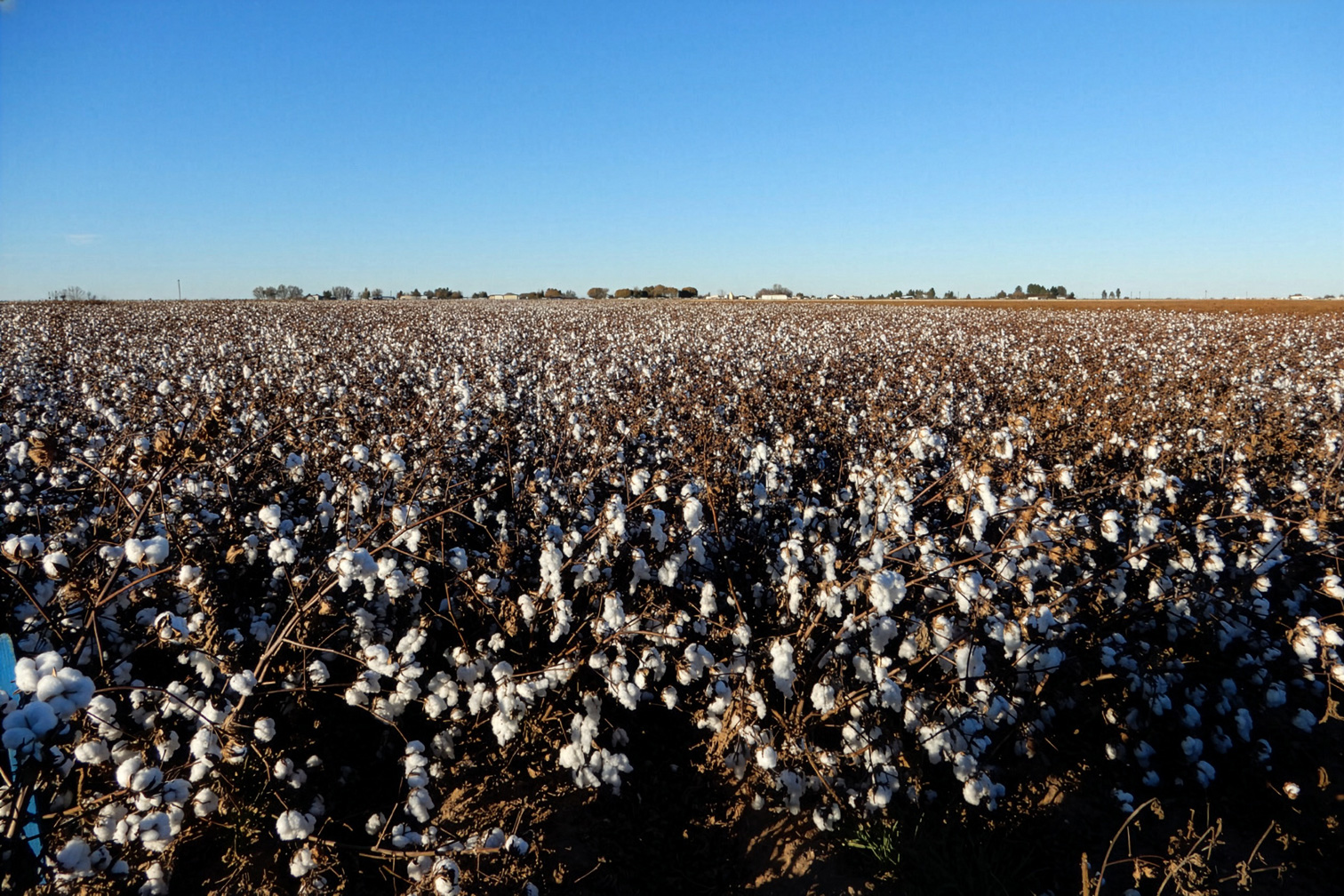
Cotton fibres differ in staple length, strength, fineness, and character. Longer-staple cotton can be spun into smoother, stronger, and finer yarns. Shorter or more irregular fibres can contribute to giving the fabric a rougher character.
But denim isn’t a bedsheet, and maximum smoothness isn’t always the objective. A denim maker may deliberately choose cotton that creates irregular yarn, because irregularity produces texture and interesting fading. So there is no universal “best cotton for denim.” There is only the right cotton for the fabric you’re trying to make.
Zimbabwe Cotton: You’ll encounter this constantly in Japanese denim. Zimbabwe cotton became particularly famous through brands such as Fullcount, which built much of its identity around the fibre. It is generally prized in denim for a soft hand and long-staple characteristics, allowing for strong yarn without excessive harshness. The resulting denim can feel surprisingly comfortable compared with aggressive heavyweight fabrics.
But here’s the important part: Zimbabwe cotton does not automatically equal excellent denim. Wonderful cotton can be badly spun; wonderful yarn can be badly dyed. Wonderful dyed yarn can be badly woven, and wonderful denim can be made into badly constructed jeans.
The Yarn: This Is Where the Character Really Begins.
Two jeans can both say: 100% cotton, 14 oz, Japanese selvedge. And they can feel completely different. One major reason is the yarn.
Traditional premium denim frequently uses ring-spun yarn, where fibres are twisted continuously into yarn. The process can produce strong yarn with subtle irregularities. Modern mass production relies heavily on faster open-end spinning, which tends toward greater uniformity and efficiency. Uniformity is useful when you’re making millions of identical jeans. It isn’t necessarily what a denim obsessive wants to wrap around their legs.
Then mills start deliberately manipulating the yarn. And that’s where things get fun. Slub, Nep and all the other denim-nerd words.
Slub → Slub yarn deliberately varies in thickness. When woven, those changes create raised and recessed areas across the cloth. Wear the jeans, and the raised areas experience more abrasion. They fade differently. That’s why heavily slubby denim can develop dramatic vertical streaks and high-contrast texture. Some Japanese brands take this to absurd levels, in a good way.
Nep → Nep is different. Neppy denim contains small knots or protruding fibres that appear to look like pale flecks or tiny tufts across the fabric.
Think of it this way: Slub = variation in yarn thickness. Nep = little fibrous flecks and knots. You can have one without the other, and you can also have them both. Neither automatically means quality. They’re just aesthetic choices. A beautifully executed smooth denim can be every bit as sophisticated as something that resembles the surface of the moon.
Rope Dyeing: This Is Why Great Denim Fades.
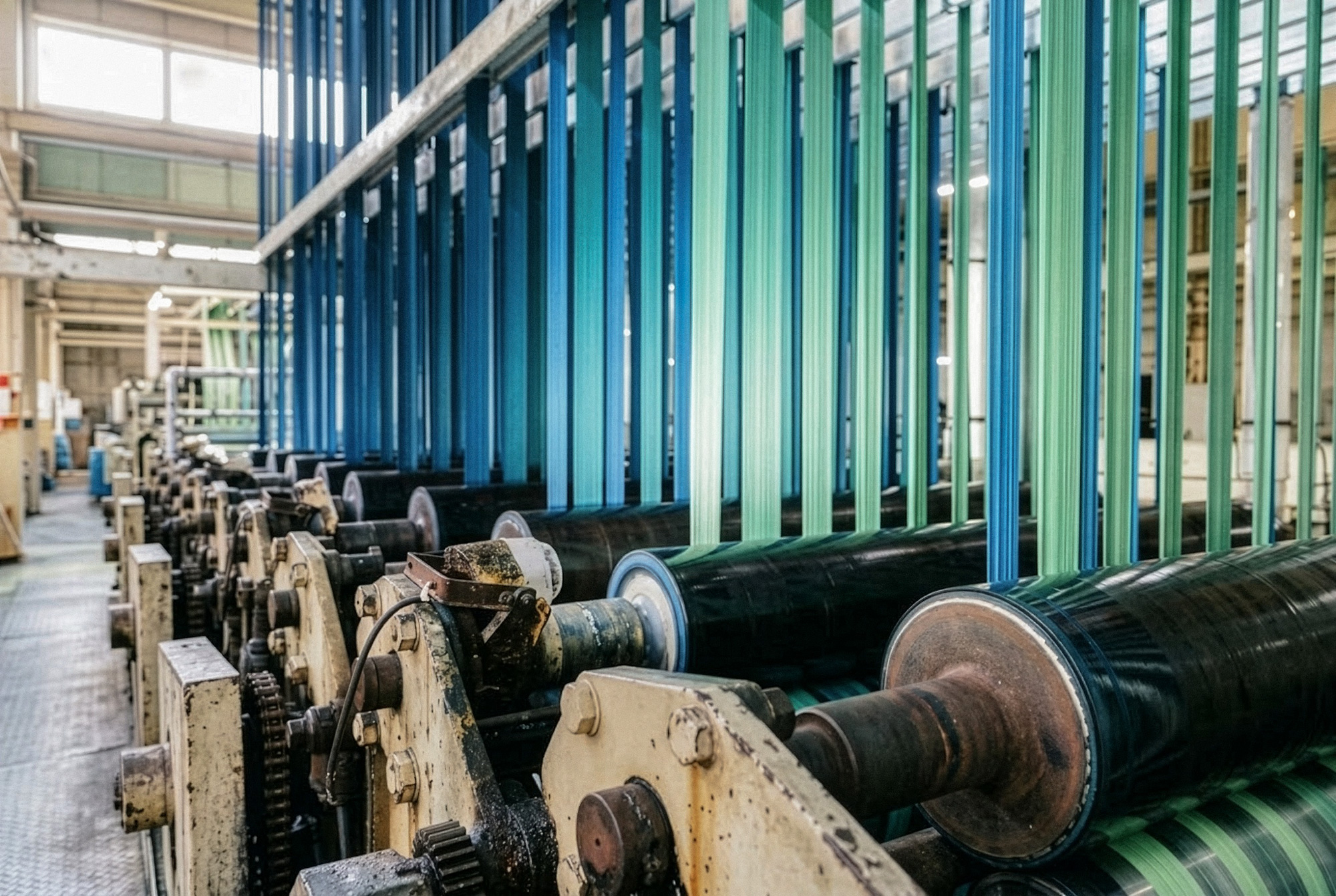
This is one of the most important processes to understand. In traditional rope dyeing, hundreds of warp yarns are grouped into rope-like bundles. They’re dipped into an indigo bath, then exposed to air, then dipped again, then oxidized again. Repeated cycles gradually build colour.
Indigo behaves unusually. In its usable reduced state, it can enter the fibre; exposure to oxygen converts it back to its insoluble blue form. The objective in classic fading denim is generally not to saturate the yarn completely to its core. You want substantial colour near the outside. A lighter core remains inside, and then friction does the rest. Repeated use and wear remove the outer indigo. The pale core begins showing through, and that’s how dark blue jeans eventually develop electric blues, pale whiskers, and nearly white high-wear areas.
Natural Indigo vs Synthetic Indigo: A Very Expensive Rabbit Hole.
Indigo dye comes in two forms: Natural, extracted from the indigo plant, and synthetic, first developed by the German chemist Adolf von Baeyer in the 1880s. Denim dyed with synthetic indigo tends to have a more uniform colour with a reddish cast (when not blended with sulfur) and fades faster with sharper contrast. Denim dyed with natural indigo shows more colour variation, with a distinctive greenish cast, and fades more slowly.
Most rope-dyed denim – whether natural or synthetic – is built the same way: cotton yarns are twisted into ropes and repeatedly dipped and oxidized, leaving the yarn’s core white or undyed. It gradually begins to reveal itself as the fabric fades. Natural indigo isn’t automatically the “greener” choice, either. It has lower fixation rates than synthetic indigo, meaning you need more dye and more water to achieve the same depth of colour.
Natural indigo has an extraordinary history and romance. Traditional Japanese indigo dyeing (aizome) can produce beautiful colour, and it’s enormously labour-intensive. It can also cost a fortune.
Synthetic indigo made consistent industrial denim possible and has been commercially available since the end of the nineteenth century.
Is natural indigo “better”? No. It’s just different. Natural indigo can create nuanced shades because the dyestuff contains compounds beyond pure indigotin, and because artisanal dyeing methods vary. Synthetic indigo offers exceptional control and consistency. Both options can make magnificent denim.
Don’t let a brand sell you “natural” as “sustainable” without asking what the actual downstream cost is. If someone charges you an enormous premium for natural indigo, it’s best to understand what you’re paying for: Rarity, labour, process, tradition, and colour. It doesn’t automatically ensure superior durability.
Denim Weight: Stop Assuming that Heavier Means Better.
Denim weight is usually quoted in ounces per square yard. Selvedge denim commonly runs anywhere from lightweight (more give, faster break-in) up to rigid, armor-like ounces that take months to soften. A well-finished 13–14 oz weight is the workhorse range most heritage brands build a daily pair around.
You’ll see:
10 oz.
11 oz.
13.5 oz.
14.5 oz.
16 oz.
21 oz.
25 oz.
And eventually some lunatic will make 30-plus-ounce jeans because human beings can’t leave anything alone, and enough is never enough.
Here’s the useful version:
Under 12 oz → lightweight. Easier in warm weather, quicker to break in
12–15 oz → the sweet spot for most people. Substantial without becoming a lifestyle decision
16–19 oz → heavyweight. Stiffer, warmer, and more demanding
20 oz+ → enthusiast territory. These can be extraordinary, but nobody needs them
Iron Heart made heavyweight denim central to its identity, particularly its famous 21 oz fabrics. They make sense in the context of motorcycle clothing and the brand’s obsession with durability. But 21 oz denim isn’t “twice as good” as 11 oz denim.
Weight is a specification, not a quality score. For someone’s first serious pair of selvedge jeans, we’d generally look around 13–15 oz. Heavy enough to understand what proper denim feels like. Light enough that sitting down doesn’t require a strategy meeting.
The Fit: The Bit that Can Ruin Your Purchase.
This may annoy denim enthusiasts. But a perfectly woven pair of $500 Japanese jeans that doesn’t fit you is still a bad pair of jeans.
When buying online, ignore the number on the tag. A size 32 from one Japanese manufacturer can measure very differently from another manufacturer’s size 32. Instead, take the best-fitting jeans you already own and measure those.
You want at least: Waist, front rise, back rise, thigh, knee, hem, inseam. Then compare those measurements with the retailer’s actual garment measurements. Pay particular attention to the thigh and rise. People obsess over waist size because that’s how jeans are sold. But a waistband can often relax somewhat with wear. Your thigh won’t negotiate with the fabric. If the thighs are brutally tight when they’re new, buying them because “raw denim stretches” is generally a terrible plan. It’s best to buy jeans you can actually move in.
Sanforized vs Unsanforized: This Part Matters. A lot.
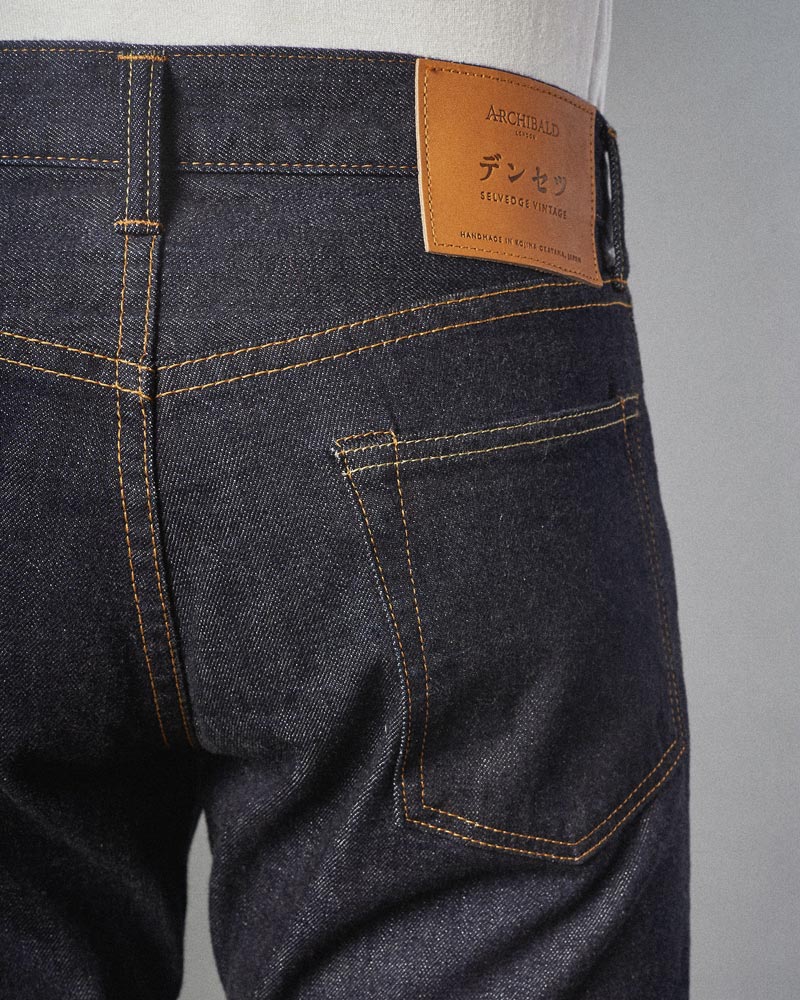
Cotton fabric shrinks when it’s washed. Sanforisation is a controlled compressive-shrinkage process performed on fabric before garment manufacture. Its purpose is to remove most of the dimensional shrinkage before you buy the jeans. Sanforized denim (which represents most commercial selvedge today) shrinks less than 3%, similar to ordinary denim.
Unsanforized (“loomstate”) selvedge will shrink roughly 7–10% after a soak. Buy unsanforized denim in your actual waist size, and it’ll fit like a tent until you soak it down. Buy it a size or two smaller, expecting shrinkage, and you’ll be fine.
Is Unsanforized Better? No. Again, different isn’t the same as better. Unsanforized denim can retain more of the loom’s original character and can develop interesting puckering, twisting, and texture after washing. It can also shrink enough to turn your expensive Japanese jeans into a gift for your significantly smaller sister (or brother). Sanforized denim is just more predictable. Most beginners should stick to sanforized unless they’ve done the size math.
Sanforized denim → relatively predictable shrinkage
Unsanforized denim → considerably more potential shrinkage remains. Unsanforized fabric in its untouched state is often called loomstate
One-wash denim → usually unsanforized denim that the manufacturer has washed once to remove most of the initial shrinkage before sale. For beginners, one-wash denim is wonderful. You get much of the character associated with traditional unsanforized fabric without needing a degree in applied mathematics to work out whether your trousers will still fit after touching water.
Leg Twist Isn’t Necessarily a Defect
Wash an old-fashioned pair of unsanforized jeans, and you may notice the side seam starts rotating around your leg. Welcome to leg twist. Twill fabric naturally contains torque. Modern finishing processes can compensate for it. Vintage-style denim sometimes deliberately preserves more of the behaviour. To someone expecting perfectly symmetrical trousers, this can look like bad manufacturing. To a denim collector, it can look glorious. This is a recurring theme in serious denim: Some of the things industrial textile manufacturing learned to eliminate are exactly the things enthusiasts later decided they missed.
How to Judge the Fabric
Forget the little red line for a moment. Use your hands, and look closely. A great denim should feel intentional. If it’s smooth, it should feel deliberately smooth. If it’s slubby, the variation should look interesting, not simple or sloppy. If it’s heavy, density and structure should accompany the weight.
So look at the face. Then turn the cuff over and look at the weft. Look at how tightly the yarns are packed. Look for variation. Rub the surface, and bend it. Feel how it springs back. And understand something critical: Raw denim can feel terrible in the shop. Starch and finishing can make beautiful denim feel like cardboard when it’s new. But the softest jeans on the rack aren’t necessarily the best ones.
You’re buying what the cloth will become, the potential. The leather before the patina. Not merely what it feels like under fluorescent lighting when you’ve glanced at it for thirty seconds.
Beyond the Fabric: Construction
This is where buyers get distracted.
They stare lovingly at the selvedge ID and completely ignore the fact that the jeans have been sewn like shit. Great cloth deserves great construction, not something bastardized.
Look at the stress points: Pocket corners, belt loops, crotch, fly, yoke, back pockets. Good jeans reinforce these areas with rivets, bartacks, extra stitching, or a combination of the three. The original reason riveted jeans existed was exactly this problem: ordinary work trousers failed at stress points.
Jacob Davis’s insight wasn’t that “denim looks cool.” It was essentially: These stupid pockets keep tearing, let’s put metal through them. That practical logic resonates.
Chainstitching, or Chain-Stitch Hemming
This is the finishing detail purists obsess over for good reason: A single-needle chain stitch, sewn on a vintage machine, produces a distinctive “roping” or puckering effect at the hem as the jeans age and fade. A modern lockstitch hem can’t replicate that.
Turn up the hem of expensive jeans, and you’ll often find chainstitching. Unlike a lockstitch, a chainstitch forms interlocking loops along the underside of the seam. Vintage machines, particularly the famous Union Special 43200G, became fetish objects because their feed characteristics help produce the puckered hem fading enthusiasts call roping.
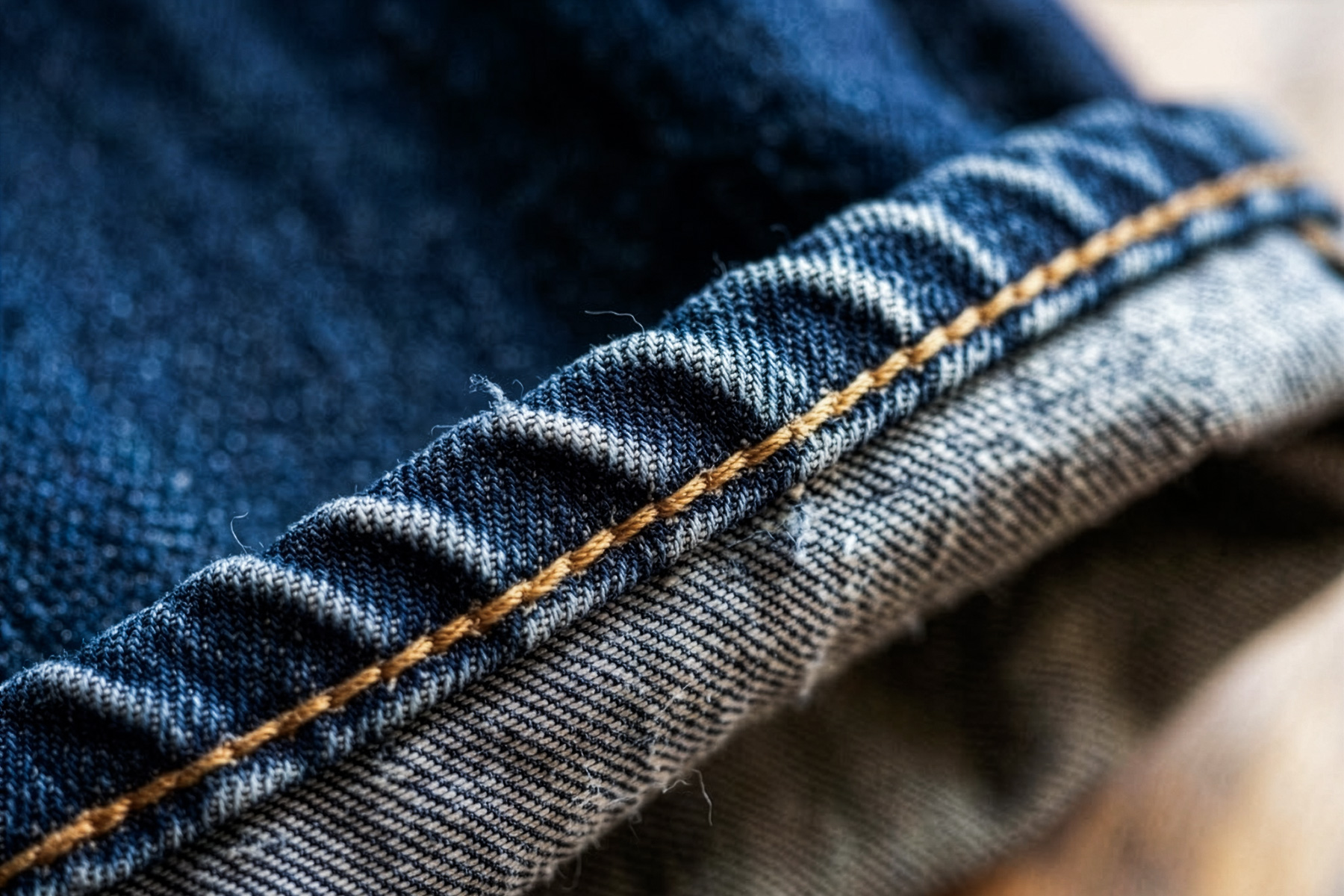
Roping can look fantastic. But now it’s time to kill another myth: A chainstitched hem doesn’t automatically make jeans better. It’s partly construction and partly aesthetic. A perfectly sewn lockstitched hem on excellent jeans remains perfectly good. So if you’re paying hundreds extra because someone said “Union Special” three times, reconsider your priorities. But if a pair claims heritage construction and the hem is flat and clean, that’s a tell.
Rivets, Hidden Rivets and Hardware
Copper rivets are part of jeans history for a reason. They reinforce areas under repeated stress. Some reproduction jeans also use hidden rivets behind the back pockets, recreating details found on vintage American jeans. Are they beautiful? Yes. Are they historically interesting? Absolutely. Are they necessary? Not really, and not always. Modern bartacking can reinforce those areas extremely effectively.
The same logic applies to elaborate buttons, custom iron hardware, and embossed leather patches. These details show a maker cares, but they don’t prove the jeans are good on their own. The fabric, pattern and sewing still have to deliver.
Archibald’s Take
Don’t get seduced by any one spec in isolation.
The selvedge ID stripe means less than people think → That coloured line along the outseam once reliably signaled which mill wove the cloth. These days it just confirms the fabric came off a shuttle loom, and nothing else. Treat it as a hint, not a certificate.
Ask which loom, not just whether it’s “selvedge” → A confident maker knows and will tell you: shuttle loom, mill name, weight in ounces. Selvedge tells you about the weave, not the quality. Ask about weight, dye method, and mill before you ask about the stripe.
Check the weight against the season and use case → Under 12 oz for warm climates and quick break-in; 13–14 oz for a daily pair; 15 oz+ if you want armor that takes real time to soften.
Look at the fade pattern on any sample or worn pair, if you can → Natural indigo fades softer and more gradually, and it isn’t automatically more ethical. Synthetic indigo (unmixed with sulfur) fades faster with harder contrast, and it isn’t automatically inferior. Neither is “wrong”, but the brand selling it should know which one they’re selling you and why. They’re different tools with different fade behaviour.
Check sanforisation before sizing → Sanforized or unsanforized changes your sizing math completely. Know which one you’re buying before you order. If a brand can’t tell you whether the denim is sanforized, they don’t know their own fabric.
Feel the hand → Selvedge denim, done properly, has a dry, slightly waxy hand from the indigo and starch, not the soft, pre-broken-in feel of a garment-washed pair pretending to be raw.
Turn the hem inside out → A visible chain-stitch roping effect, or at minimum clean, deliberate stitching, signals someone who cared about the finish. Sloppy overlocking on a garment marketed as heritage-grade is a red flag.
The “Made in America selvedge” mill that supplied this whole category for a century closed at the end of 2017 → Anyone selling that story today owes you an explanation of where the fabric actually comes from now.
Price under $100 for genuine shuttle-loomed cloth should raise questions, not excitement.
Where Do the Best Mills Haunt?
Selvedge lives or dies by geography and history, like many other highly prized textiles. Here, the story is about who kept the old looms running when the rest of the world scrapped them.
Japan – Okayama Prefecture
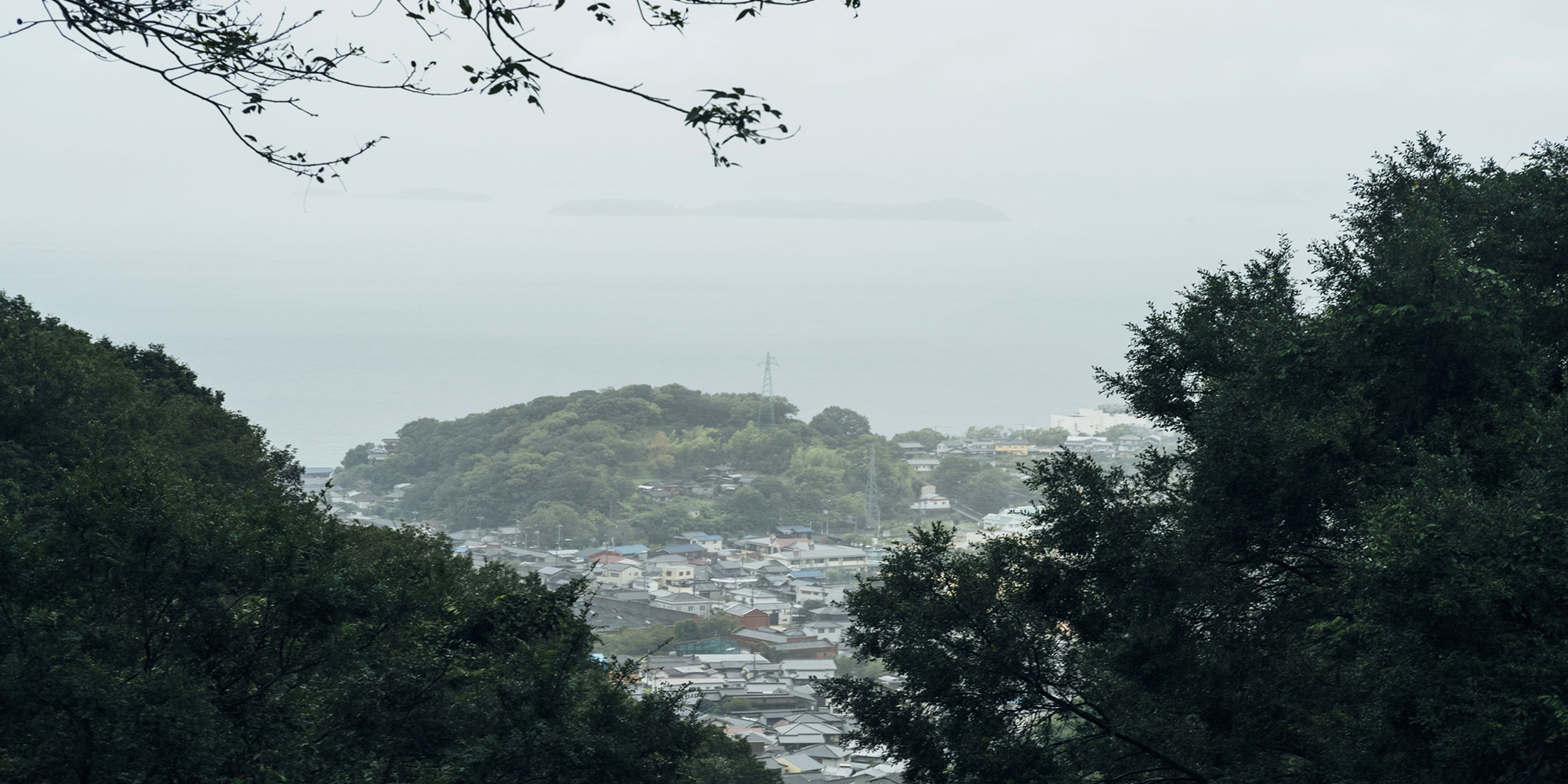
This is the epicenter. When American mills abandoned shuttle looms for speed in the 1950s–70s, Japan didn’t. Small mills in the Okayama region kept vintage Toyoda and Draper shuttle looms running, at first just producing commodity fabric, and eventually rebuilding a lost art around it. Japanese mills also preserved and refined rope-dyeing and natural indigo craft at a level nowhere else matched.
Kaihara (Fukuyama, Hiroshima - Establish 1893)
Originally founded in 1893 as an indigo kasuri (traditional dyed textile) producer, Kaihara became the first mill in Japan to develop rope-dyeing in-house in 1970, and later built out a fully integrated production system covering weaving, finishing, and spinning. Today it’s estimated to supply roughly half of Japan’s domestic denim market and exports to more than 30 countries; everyone from mass-market labels to boutique Japanese brands runs on Kaihara cloth. This mill proves that scale and craft aren’t automatically enemies.
Nihon Menpu (Okayama)
The opposite end of the spectrum from Kaihara: a smaller, craft-focused weaver specialising in traditional narrow shuttle-loom selvedge and artisanal indigo dyeing, prioritising character and texture over volume.
Shinya Mills
Operating since the early 1950s, weaving on vintage Toyoda shuttle looms for brands including Iron Heart, Full Count, and Big John, and central to the modern selvedge renaissance over the last several decades.
Italy – Robecchetto con Induno
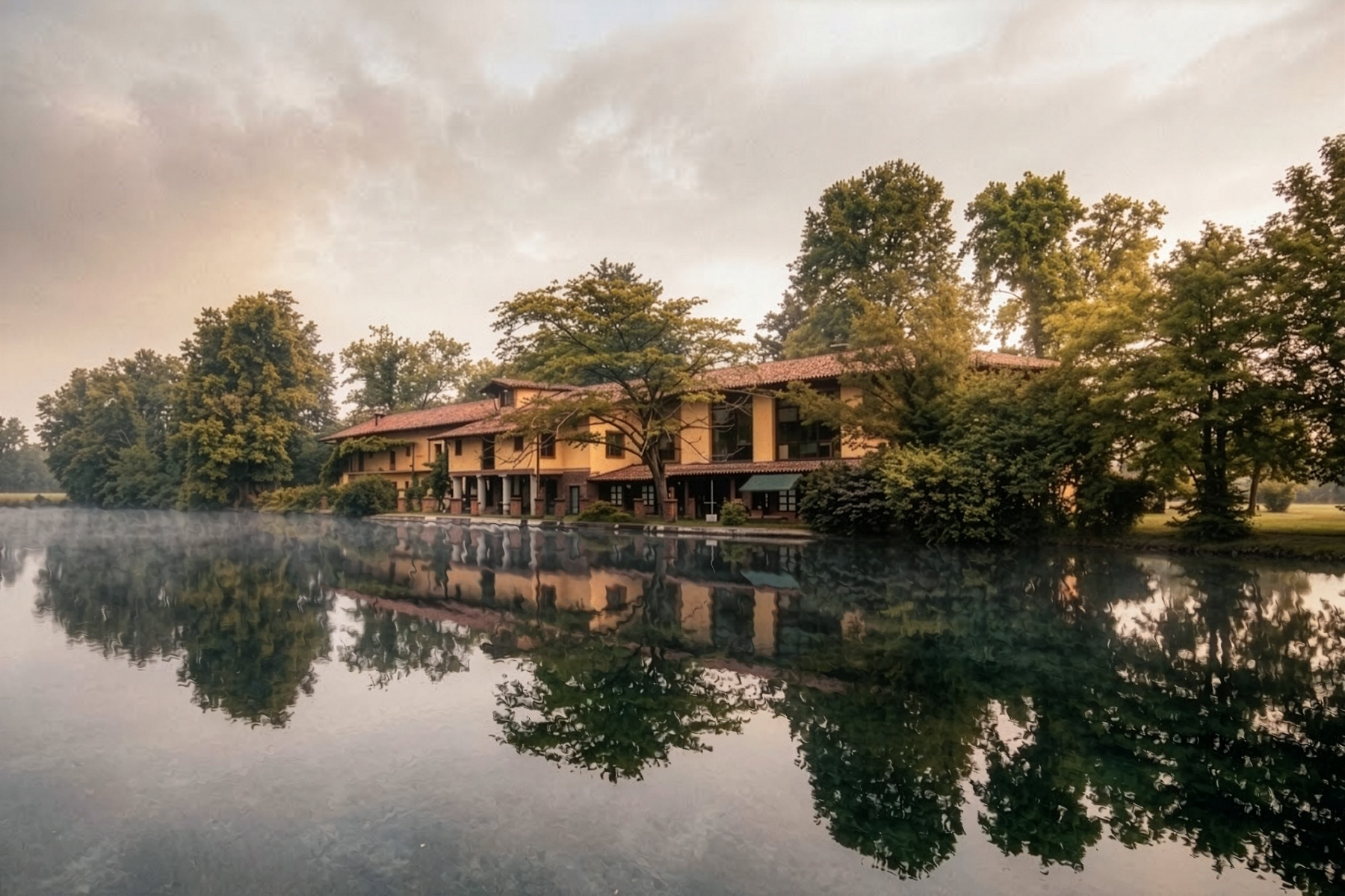
Candiani (Robecchetto con Induno, Italy - Establish 1938)
Founded in 1938, four generations family-run, and now positioned as one of the most vertically integrated and sustainability-forward denim mills anywhere, having pioneered a transition into fully denim-focused, vertically-integrated production starting in the 1960s. Effectively the only mill still producing denim in the region where the fabric’s ancestor (indigo-dyed fustian) was first made in Genoa centuries ago. Notably expensive to run this way, the mill has said its cotton costs roughly double conventional denim, in part because labour costs in Italy dwarf sourcing from lower-cost countries.
United States – the mill that no longer exists
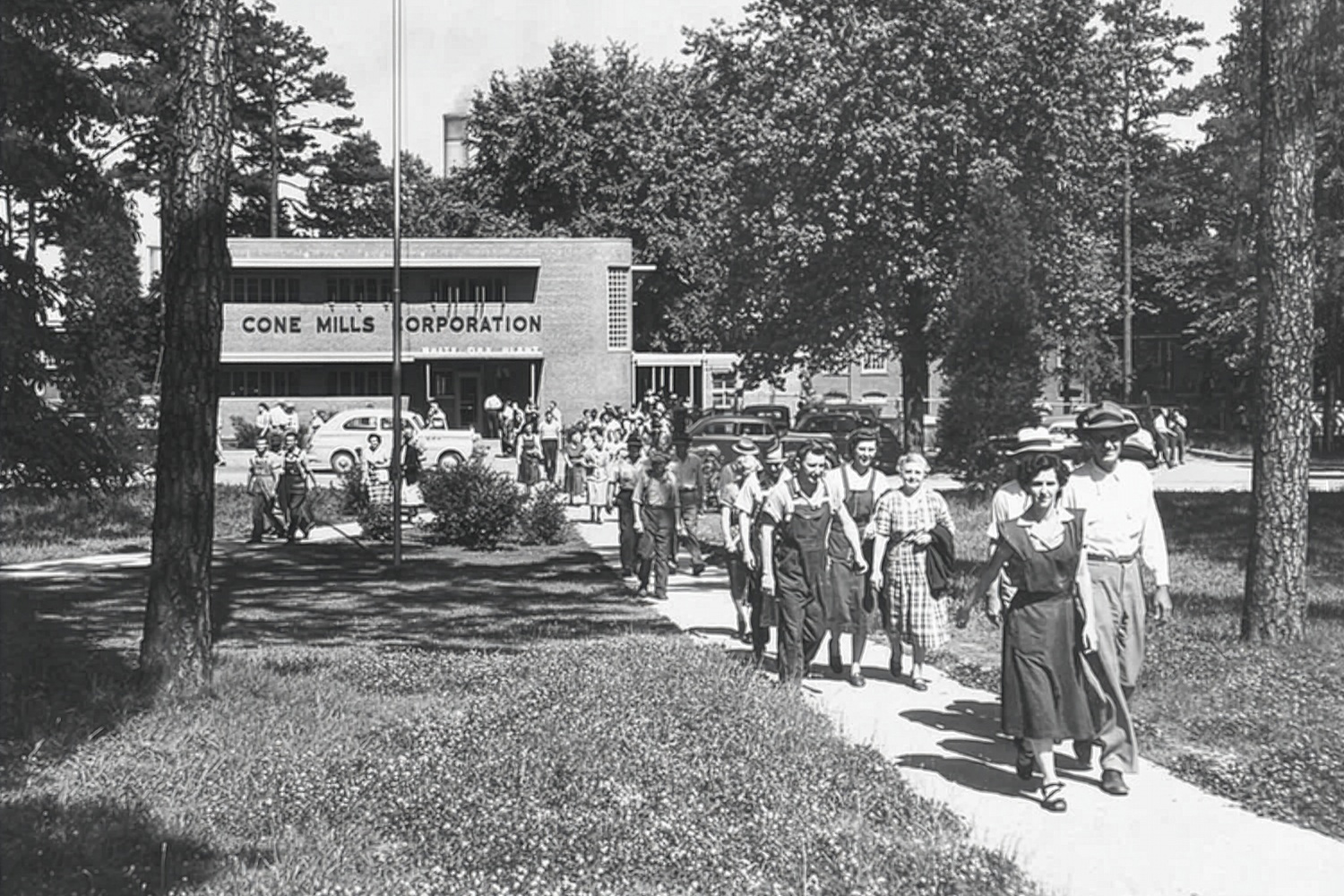
Cone Mills White Oak (United States)
Not a current option; this is the ghost in the room. But important history. Its Draper X3 shuttle looms wove the red-line selvedge that supplied Levi’s for generations, roughly seventy years, before the plant closed for good on December 31, 2017. Surviving deadstock fabric is now genuinely collectible, and any brand still building from it should be transparent that the well is finite and won’t refill. No large-scale American shuttle-loom mill can replace it. Anything marketed today as “American-made selvedge” is either running on deadstock White Oak fabric, importing woven cloth and finishing domestically, or lying to you.
Turkey and other emerging players
Turkish mills have scaled up denim production generally, and some now run limited selvedge lines, largely serving European and value-driven brands. Quality varies widely, and the region hasn’t built the depth of specialist heritage reputation Japan and Italy have, worth knowing if a “selvedge” tag shows up on a price point that doesn’t add up.
What Makes Japanese Denim So Special?
We can’t fully answer the question properly. It isn’t one thing; it’s the sum of many parts. The combination of specialist mills, rope-dyeing expertise, ring-spun yarn, shuttle-loom weaving, willingness to experiment with tension, obsessive reproduction of vintage fabrics, unusual cotton selection, specialised garment factories, and a consumer culture willing to pay for details most people will never notice.
Most importantly, Japanese makers stopped treating imperfections as things that always needed fixing. They learned to control imperfection, which is a skill. Great slubby denim isn’t something random. Someone engineered the yarn to be specifically irregular. And great low-tension denim isn’t loose because the mill couldn’t operate the loom properly; the loom was deliberately configured that way. The difference between character and defect is in the control used to create it.
What Are You Actually Paying For?
A pair of jeans has a cost stack, and every step in it is a decision somebody made — or a corner somebody cut. Roughly, in order:
Cotton comes first: what grade was bought, what staple length, and what got rejected before spinning ever started. Then spinning — ring-spun on slower frames costs more than open-end, and characterful irregularity has to be engineered, not left to chance. Then dyeing: rope-dyeing with repeated dips and oxidations is slow work, and natural indigo multiplies the labour and the water. Then weaving: a shuttle loom turns out a fraction of the cloth per hour of a projectile loom, in narrower bolts, which means more fabric per pair and lower yield. Then finishing — sanforisation, singeing, inspection — all of it costs money, and skipping it is how cheap denim stays cheap. Then cutting and sewing, which is labour measured in minutes per garment and varies enormously by country. Then hardware, stitching density, and reinforcement. Then everything after the factory: shipping, duties, warehousing, the retailer’s margin, marketing, and the brand’s own margin.
Here’s the useful question, and it’s the one this guide keeps asking in different words: which steps did the money go into? A $300 pair where the money went into the mill and the sewing room is a different proposition from a $300 pair where it went into the marketing budget. The price tag can’t tell you. The jeans can — if you know how to look, which is what the sections above are for.
One more thing worth knowing: the cheapest step to fake is the story. Words like “premium,” “Japanese-inspired,” and “heritage” cost nothing to print on a hangtag. A shuttle loom costs a fortune to keep running. When the story is doing more work than the cloth, you’re paying for the story.
The Point of Diminishing Returns
Somewhere on the price ladder, extra money stops buying better jeans and starts buying something else. It’s worth knowing where that point sits.
Up to roughly the price of a well-made pair from a competent maker, money buys tangible things: better cotton, real rope-dyeing, denser weaving, stronger construction, hardware that holds. The jump from a $90 pair of fast-fashion “selvedge” to a $250 pair from a serious maker is the biggest value step in denim. You can feel it, see it, and measure it in years of wear.
Past that, the curve flattens. A $500 pair is not twice the jeans of a $250 pair. It may use rarer cotton, natural indigo, unsanforized loomstate cloth, or construction faithful to a 1947 original down to the thread count — all real, all defensible, none of them doubling durability or comfort. Iron Heart’s 21 oz denim is magnificent and, as we said, often completely unnecessary. That’s not a criticism; it’s the point. Past the knee of the curve, you’re buying obsession, rarity, and the pleasure of knowing exactly how a thing was made.
None of that is wasted money — if it’s what you want. The waste is spending past the knee without knowing the knee exists: paying heritage prices for marketing, or enthusiast prices for theatre. Buy the jeans whose price you can account for, step by step, and you’ll never overpay. The most expensive mistake in denim isn’t buying the $500 pair. It’s buying the $250 pair twice because the first one was bought on the strength of a swing tag.
Who Does It Right? (Best Selvedge Brands Ranked – Warp to Weft)
Our scores come from Archibald’s own sourcing, making, wearing – and occasionally failing – plus the wisdom (and noise) of forums. As we said earlier, Forums can be invaluable. Just take them with a grain of salt. That’s also (again) why we lead with our own primary opinions. So we welcome commentary and controversial opinions we can weigh in against, if you do decide to write in.
The Historical Heavy-Hitters Worth Understanding
Levi’s (San Francisco - Establish 1853)
Levi Strauss & Co. is where the modern blue jean story effectively begins: in 1873, Levi Strauss and tailor Jacob Davis received the patent for using copper rivets to reinforce work trousers, creating the ancestor of the modern jean. The 501, introduced under that lot number in 1890, became the template almost everyone in this guide – from Warehouse and Denime to Fullcount and TCB – responds to, in one way or another.
Modern mainline Levi’s is a different proposition: enormous scale, variable fabrics and manufacturing, and generally nowhere near the obsessive standards of Japan’s best reproduction makers. But Levi’s higher-end Levi’s Vintage Clothing (LVC) reproductions are considerably more interesting, recreating archival 501 specifications from different eras. You can buy technically better jeans elsewhere; you cannot buy a more important one. Without Levi’s, Japanese selvedge culture as we know it simply doesn’t exist.
Levi’s occupies a strange middle ground. Levi’s Vintage Clothing has periodically sourced genuine heritage-grade fabric, including limited runs from the final days of Cone Mills White Oak, releasing a 1955 501 jean and 1953 Type II trucker jacket from the mill’s last shrink-to-fit fabrics before it closed, while Levi’s mainline product is mass-market denim with no meaningful connection to shuttle-loom construction. Same brand name, two entirely different products. Very important to ask which one you’re actually buying.
Score: 7.8/10 overall; LVC: 8.8/10
The Osaka Five and Their Heirs
Studio D’Artisan, Denime, Evisu, Full Count, and Warehouse & Co. The pioneers: five Osaka- and Kobe-based labels that, working in close and famously non-secretive collaboration, reinvigorated Japan’s fading denim-weaving regions and set the template for reproduction denim as a craft.
Denime (Osaka - Establish 1988)
Purist denim. Rather than chasing extreme weights or exaggerated texture, Denime became known for faithfully recreating the character of vintage American jeans – particularly 1960s Levi’s – with carefully developed selvedge denim and beautifully natural fading techniques. Hayashi later founded Resolute; today Denime has been revived with Warehouse, returning to its original fabrics and patterns. Historically important, understated, and very serious denim.
Score: 9.3/10
Studio D’Artisan (Osaka - Establish 1979)
The genuine origin point of the entire modern selvedge revival, the brainchild of Shigeharu Tagaki, predating most of the names international denim enthusiasts find gushworthy. The first Japanese label obsessively reproducing vintage American denim, using natural indigo and unsanforized fabric, and directly inspiring the four other members of what became known as the Osaka Five. It played an important role in the Japanese reproduction movement, and still remains known for combining heritage construction with more experimental fabrics. If you want to understand modern Japanese denim, SDA belongs in the history lesson.
Score: 9.0/10
Evisu (Osaka - Establish 1991)
Founded by Hidehiko Yamane, Evisu began, locked in as a proper denim obsession: Vintage-inspired jeans produced in tiny quantities. Yamane famously hand-painted the now-iconic gull onto the back pockets. It became one of the most internationally influential Japanese denim brands, eventually crossing over from hardcore reproduction into streetwear and fashion. That success makes modern Evisu less consistently purist than Warehouse, Denime or Fullcount, but don’t mistake the loud branding for shallow origins; the original product had serious substance and helped put Japanese denim on the global map.
Score: 8.8/10
Fullcount (Japan - Establish 1992)
Comfort without compromise. Fullcount became closely associated with Zimbabwe cotton and vintage-inspired jeans. Where some Japanese brands chase spectacular texture or enormous weight, Fullcount’s great achievement is making serious denim remarkably wearable. The fabric develops character without feeling like body armour. For a beginner who wants to understand why people love Japanese denim without suffering for three months first, Fullcount makes enormous sense and selvedge approachable.
Score: 9.4/10
Warehouse & Co. (Osaka - Establish 1995)
The archaeologists of the industry; one of the great vintage-reproduction specialists. Brought to life by twin brothers Kenichi and Koji Shiotani, the obsession here is not “How extreme can denim become?” It’s: “What did great American jeans actually look and feel like decades ago, and how closely can we reproduce that?” The yarn, the weave, sewing specifications, patterns, and ageing characteristics all matter and factor into their equations. If you’re interested in denim history rather than denim theatre, Warehouse belongs near the top.
Score: 9.5/10
The Exceptional
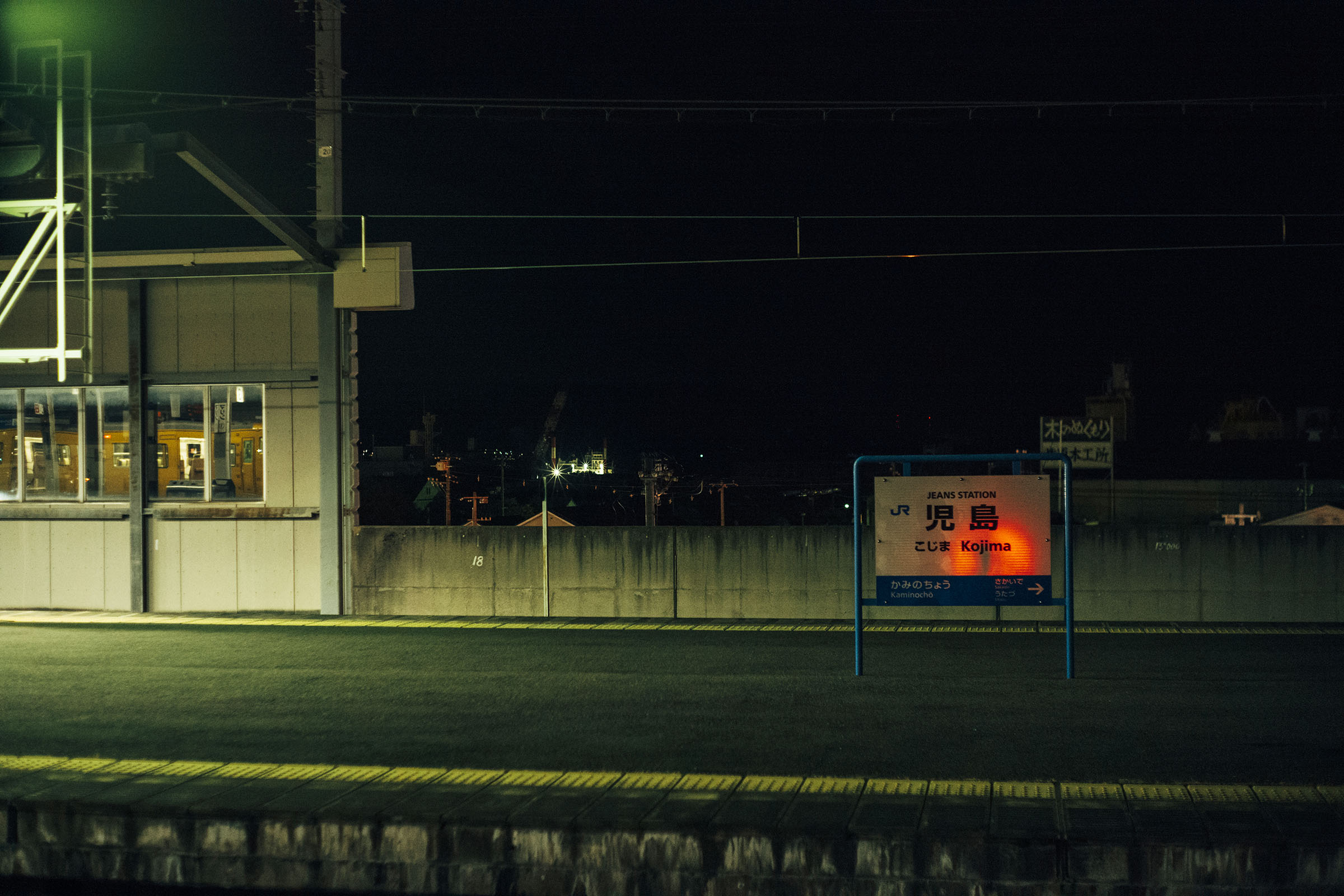
Momotaro Jeans (Kojima - Establish 2006)
Born out of the Japan Blue Group’s denim-weaving operation, Momotaro built its name on painstaking reproduction work before launching its own line with a signature pink-line selvedge. If you want proof that a mill-first mentality produces better jeans than a design-first one, this would be the case study. It took the obsessive traditions of Japanese denim and turned them into something cleaner, more contemporary, and internationally accessible. Its signature is exceptionally controlled rope-dyed indigo, traditionally associated with very deep colour and slow, high-contrast fading, combined with substantial Japanese selvedge fabrics and meticulous construction. The famous white “Going to Battle” stripes make the jeans instantly recognisable, but the substance underneath the branding is excellent. The quality of the fabric, dyeing, sewing and finishing largely justifies its price points. One of the safest recommendations for someone wanting to understand what premium Japanese denim is actually about.
Score: 9.4/10
Iron Heart (Japan - Establish 2003)
Construction is extremely serious. Iron Heart became famous for heavyweight denim, particularly its 21 oz fabrics, and originally developed clothing for motorcyclists. It was born and grew from that scene in Japan, building a reputation on brutally overbuilt denim, sewn with construction meant to survive a literal crash, not just a work shift. It’s not subtle, and not meant to be. The aesthetic is less archaeological reproduction and more industrial overengineering. If you want denim that feels substantial enough to survive a minor structural collapse, start here. The downside is it’s expensive, heavy, and often completely unnecessary. But that’s also half the appeal.
Score: 9.3/10
Samurai Jeans (Osaka - Establish 1997–98)
Everything you’d expect, but on another level. Samurai takes the details seriously. Custom denim, distinctive cotton choices, heavy fabrics, custom hardware, strong fades, bold construction. If Warehouse is studying an original pair of 1940s jeans under museum lighting, then Samurai feels like somebody asked: “What would happen if you gave the original maker three espressos and no cost accountant?”
Score: 9.2/10
TCB Jeans (Kojima - Establish 2012)
The workshop, if Warehouse represents the archaeologists. TCB operates out of Kojima and has built a reputation around deeply researched vintage reproduction. They’ve made their mark within this world of well-researched, wearable art. The company is unusually interested in the machinery and sewing methods behind historic jeans, not just in simply copying the silhouette. So the result feels more like a workshop than a luxury brand, which is a compliment in this day and age. TCB is one of the clearest demonstrations that great jeans don’t need luxury-fashion positioning.
Score: 9.2/10
Resolute (Osaka - Establish 2010)
Commercial restraint. Resolute is the project of Yoshiyuki Hayashi, a man previously closely associated with Denime. The philosophy towards denim is refreshingly narrow. Rather than produce an endless zoo of fabrics, weights, and gimmicks, Resolute focuses heavily on a small family of carefully developed fits and denim. The famous 710 is the obvious example. This is denim for someone who wants the jeans to be right, not interesting on a spec sheet. We respect that enormously.
Score: 9.1/10
Pure Blue Japan (Kurashiki - Establish 1997)
One of the names to know if the fabric itself is what excites you. The brand became famous for highly textured, slubby denim and distinctive indigo character. This isn’t necessarily the denim we’d use to teach someone what vintage Levi’s felt like. PBJ shows what happens when Japanese denim stops reproducing America and starts becoming its own textile language.
Score: 9.1/10
Competent DTC
Accessible denim still deserves respect; you don’t need to spend $400 to enter this world. A newer wave of independent brands, largely American, largely small, built businesses around sourcing real Japanese or Italian mill cloth (frequently Kaihara or Candiani) and being straightforward about it: 3sixteen, Tellason, Railcar Fine Goods, Rogue Territory, Left Field NYC, and Naked & Famous among them. Naked & Famous, in particular, has leaned into the eccentric end of what Japanese mills can produce, sourcing everything from ultra-heavyweight fabrics to novelty blends through repeated collaboration trips to Okayama mills. These brands don’t have the mythology of the Osaka Five, but plenty deliver mill-verified fabric at a fraction of the price of the legacy names.
Naked & Famous (Montreal - Establish 2008)
Canadian brand. Japanese fabrics. Enormous experimentation. Naked & Famous has produced everything from straightforward raw selvedge to frankly ridiculous novelty denim. That makes the range inconsistent by definition – but also fun. They’re a good gateway into understanding how dramatically different denim fabrics can behave.
Score: 8.2/10
Acne Studios (Stockholm - Establish 1996)
The fashion minimalist. Acne Studios has denim at the root of its story: one of its earliest projects was a run of 100 pairs of raw-denim jeans distributed among Stockholm creatives, helping propel the company from a creative collective into a household fashion brand. Acne still makes very good jeans, including Japanese selvedge offerings, with excellent cuts and a particularly strong understanding of proportion and wash. The fabric serves the fashion. You’re paying partly for design, silhouette and Acne’s cultural cachet, and denim obsessives can find more technically ambitious cloth for less. Excellent fashion jeans; good rather than exceptional value as pure selvedge.
Score: 8.2/10
A.P.C. (Paris - Establish 1987)
The gateway drug. Founded by Jean Touitou, A.P.C. played an outsized role in bringing raw Japanese denim to a mainstream fashion audience. Its formula was deliberately simple: clean cuts, minimal detailing, dark raw denim, with none of the reproduction theatrics. The famous New Standard became an entry point into raw denim for an entire generation, developing beautiful high-contrast fades because little else was competing for attention. Serious denim obsessives can find better fabric, construction, and value elsewhere today, but A.P.C.’s importance is undeniable. They made raw denim understandable – and cool – to people who had never heard of Okayama.
Score: 8.0/10
Uniqlo (Japan - Establish 1984)
The democratizer done right; here’s where snobbery becomes stupid. Uniqlo proves that inexpensive denim doesn’t necessarily mean bad. Its better selvedge models have famously used fabric from Kaihara, one of Japan’s major denim manufacturers, giving buyers access to genuine Japanese selvedge at prices that can seem almost absurd beside enthusiast brands. Are they Iron Heart? No. Are they trying to be? Also no. But if someone wants to spend relatively little money and understand what raw-ish Japanese selvedge feels like, certain Uniqlo models have offered extraordinary value. A cheap pair of jeans you wear constantly is a better purchase than $500 grail denim sitting in your wardrobe because you’re afraid to fade it incorrectly. For someone buying their first pair of selvedge, it can offer exceptional value and a legitimate introduction to raw denim without the financial commitment – or the denim-nerd ceremony. Probably the best place to start if you aren’t yet sure you care.
Score: 7.6/10 for the right selvedge models
The “Democratizers”
Why we pass on everyone else. High-street and fast-fashion retailers occasionally market “selvedge” jeans at aggressive price points. Given that genuine shuttle-loom weaving is ten to fifteen times slower than modern methods and requires specialised, aging equipment, a true selvedge fabric simply cannot be produced at fast-fashion cost structures without cutting corners somewhere.
You usually lose out in weight, dye quality, or finishing. So treat any selvedge claim under roughly $80–100 retail with real suspicion, and check whether “selvedge” refers to the whole garment or a decorative strip sewn on for looks.
How to Wash Raw Denim
This subject has produced more nonsense than it deserves. You’ve probably heard: Don’t wash your jeans for six months. Put them in the freezer. Wear them into the ocean. Sit in the bathtub wearing them. Never use detergent. Sacrifice a goat under a full moon. Keep the blood and paint it on your face.
Enough. It’s stupidly simple: If your jeans are dirty, wash them. Waiting longer between washes can encourage sharper high-contrast fades because more indigo remains elsewhere on the garment. Washing more frequently generally produces softer, more blended, vintage-style fading. Neither is objectively better.
What you shouldn’t do is let sweat, skin oils, and dirt accumulate indefinitely because you’re terrified of losing indigo. Jeans are clothes. For most raw denim, a sensible approach is a cool or lukewarm wash with a mild detergent, avoiding bleach, followed by air drying unless you’re deliberately trying to increase shrinkage.
Always check the manufacturer’s instructions, particularly with unsanforized denim.
What Are Whiskers, Honeycombs and Roping?
Denim people have names for everything.
Whiskers → horizontal creases typically seen spreading across the lap and upper thighs
Honeycombs → folded fade patterns behind the knees where they crease
Stacks → fades where the inseam (often excess) stacks or piles up, creasing around the ankle
Roping → twisted, or puckered fading by a chainstitched hem
Train tracks → the parallel fade marks found by seams
You don’t need to manufacture these treatments; they’re just the result of wearing the jeans.
Your body does the finishing, and that’s the point.
The Thing Everyone Gets Wrong About Fades
High contrast isn’t automatically better. Instagram changed people’s expectations, and they never reset. A spectacular pair of jeans with almost white whiskers against dark indigo photographs brilliantly. But look at genuinely old workwear and the fading is often much softer, which is another kind of beauty. There is no correct way for jeans to fade. The only genuinely ridiculous outcome is buying raw denim and then being too frightened to live in it.
Repair Them
This may be the best thing about proper denim. It can be repaired almost indefinitely. Crotches can be darned, knees patched, pocket bags replaced. Hems can be rebuilt, and seams restitched. Some people use nearly invisible machine darning, while others deliberately celebrate the repair with visible stitching inspired by Japanese sashiko traditions.
Either way, repair changes the garment’s economics. A $300 pair of jeans worn for eight years isn’t expensive in the same way a $100 pair thrown away every eighteen months is. That’s where the idea of luxury becomes interesting. It’s not the price point.
What We Learned
We didn’t start out knowing any of this. We learned it the slow way: by sourcing cloth, making jeans, wearing them until they fell apart — including the pairs we’d rather forget — and developing opinions worth having.
We learned that the selvedge ID is the least interesting thing about a pair of jeans. It’s the first thing you notice and nearly the last thing that matters — and we learned it the way everyone does, by overpaying for a stripe.
We learned that weight is a specification, not a quality score: by making and wearing heavy denim that impressed everyone in the shop and exhausted everyone who owned it.
We learned that “natural” is not a synonym for “better,” and certainly not for “greener.” Natural indigo taught us that through dye lots that cost a fortune and faded beautifully — and through the water it took to get there.
[Placeholder — one real sourcing story belongs here: a mill that disappointed, a spec we got wrong, a variable we underestimated. The format asks for mistakes and changed opinions, and one concrete story is worth more than everything above.]
The thread running through all of it: every shortcut we tried — trusting a certificate instead of our hands, trusting a country name instead of a mill name, trusting a price instead of a cost stack — cost us more than doing it properly would have.
What We Chose — and Why
[Placeholder — this section needs the Archibald jean spec to work. The shape it should take:]
We chose [mill, location] because [what they do differently — the maker test from earlier in this guide]. We chose [weight] oz because [the sweet spot for daily wear, not the heaviest cloth we could source]. We went [sanforized / unsanforized] because [the sizing math]. Our indigo is [rope-dyed natural / synthetic] because [the fading behaviour we wanted and what it costs]. The construction is [chainstitched hems / hidden rivets / etc.] because [what each detail actually does, not what it signals].
And the compromises, stated plainly: [what we didn’t do — e.g. natural indigo, a heavier weight, a more theatrical detail — and why it didn’t survive the diminishing-returns test].
The point isn’t that these are the only right choices. It’s that every one of them can be defended with the logic this guide teaches — which means you can check our work.
The Final Word
Selvedge denim isn’t magical. It’s cotton, indigo, and yarn. It requires a loom, a sewing machine, and some metal hardware. That’s precisely why it’s so interesting. Quality has nowhere to hide.
A mill has to choose the cotton. Someone has to spin the yarn and decide how irregular it should be. Dyeing is involved, and then loom tension factors in, along with the speed at which it is woven. Someone has to finish the cloth. Someone else has to cut it. Then somebody has to sit behind a sewing machine and turn all of that work into a pair of jeans. These are all conscious choices made by people with skilled control techniques and an eye.
Change any one of those decisions, and you change the garment. That’s what mass-market language like “premium Japanese selvedge denim” conveniently skips over. It compresses an entire supply chain into four impressive-sounding words. Don’t fall for it.
Selvedge alone doesn’t make great denim. Japan alone doesn’t make great denim. And a $500 price tag certainly doesn’t guarantee great denim; great denim comes from a series of good decisions.
For you, as the customer? Buy the fabric that matches how hard you’re going to wear it, wear it until it tells its own story, and don’t let a marketing department convince you a stitch pattern is a personality trait. Wear the hell out of your jeans. Wash them when they’re dirty. Repair them when they break. And one day, you’ll look down and realise the jeans you bought aren’t really there anymore, but something better is. And they’re intrinsically yours. They tell a story about where they’ve been and what you’ve lived through together.